The New Luxury of Discretion: How Palace Hotels Are Redefining Privacy
Dernière mise à jour : 1 mai

For decades, palace hotels were designed to be seen. Grand entrances, opulent lobbies, iconic façades luxury hospitality once thrived on visibility. Today, that paradigm has shifted. In an era defined by constant exposure, the most refined hotels are no longer competing for attention. They are competing for silence.
Privacy has become the ultimate luxury currency. Not as an abstract promise, but as a carefully engineered experience. The world’s most prestigious hotels are quietly redesigning their architecture, services, and operational philosophies to protect guests from visibility rather than encourage it.
This transformation is not cosmetic. It reflects a profound change in the expectations of high-net-worth travelers. Public figures, business leaders, collectors, and ultra-discreet clients no longer seek grandeur alone. They seek control over their time, their movements, and their interactions. True luxury, today, is the ability to exist without being observed.
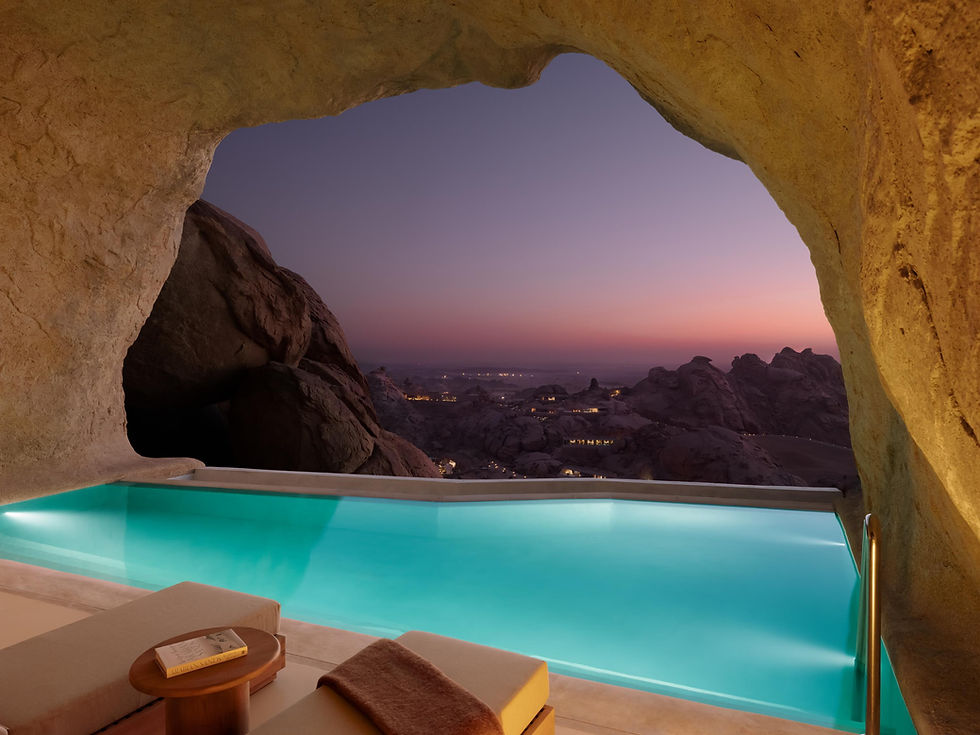
Palace hotels have responded by rethinking space itself. Private entrances, secluded wings, independent villas, and discreet circulation paths are no longer optional features; they are strategic priorities. In many properties, guests can now arrive, dine, relax, and depart without ever crossing a public area. The choreography of hospitality has become invisible.
Service, too, has evolved. The most refined luxury service is no longer anticipatory in a demonstrative sense. It is precise, restrained, and deeply personalized. Staff are trained not to impress, but to withdraw. Presence is replaced by availability. Excellence is measured by what does not happen: interruptions, delays, unnecessary interactions.
Technology plays a paradoxical role in this new ecosystem. While digital tools are essential, they are deliberately hidden. Check-ins occur privately. Preferences are recorded silently. Communication happens discreetly, often through secure channels that respect boundaries. The goal is not innovation for its own sake, but frictionless autonomy.
This pursuit of privacy is particularly visible in palace hotels with historic legacies. Properties that once symbolized social life ballrooms, salons, public dining rooms are now reinterpreting their role. Public spaces remain, but they are complemented by layers of seclusion. The guest experience is no longer linear; it is customizable.
Geography also plays a role. Remote destinations, private islands, and secluded mountain retreats have long understood the value of isolation. What is new is how urban palace hotels are achieving the same effect. In global capitals, where visibility is unavoidable, luxury hotels are becoming sanctuaries buffer zones between the guest and the outside world.
January is a revealing moment for this sector. As travelers plan their year, privacy consistently emerges as a decisive criterion. The demand is not seasonal. It is structural. Post-pandemic travel habits have reinforced the desire for controlled environments, where comfort includes psychological security.
This evolution has implications beyond hospitality. Palace hotels now function as extensions of private life. They host confidential meetings, discreet celebrations, and personal retreats. In many cases, they replace private residences, offering services that individuals cannot replicate independently.
The economics of discretion are complex. Designing privacy requires investment architectural modifications, staff training, limited occupancy strategies. Yet the return is loyalty rather than volume. The most discreet hotels do not seek maximum capacity. They seek repeat guests who value trust over novelty.
Discretion also influences aesthetics. Interiors are increasingly understated. Visual excess gives way to material intelligence: soundproofing, natural light, tactile surfaces, spatial flow. Luxury is felt rather than displayed. The most successful hotels understand that calm is not emptiness it is composition.
Importantly, this movement is not about isolation from reality. Guests do not seek disconnection; they seek selectivity. They choose when and how to engage with the world. Palace hotels that succeed are those that offer both: access and retreat, visibility and withdrawal.
Critically, privacy must be authentic. Guests instantly perceive performative discretion. A hotel cannot claim privacy while encouraging social media exposure or public spectacle. Consistency is essential. Every element from staff behavior to architectural design must align with the promise of discretion.
As hospitality continues to evolve, palace hotels are redefining their purpose. They are no longer stages for luxury. They are shelters for it. In doing so, they reflect a broader cultural shift: luxury is no longer about being seen at the right place, but about being protected in the right one.
In a world where everything is shared, privacy is no longer a comfort. It is a statement.
LuxuryHotels PalaceHotels DiscreetLuxury PrivateTravel HospitalityExcellence
UltraLuxury
LuxuryLifestyle
TravelCulture
FiveStarHotels
LongFormJournalism


Commentaires