When Luxury Mimics the Mundane: An Investigation into Balenciaga’s £775 “Plastic Bag” Phenomenon
- 11 août 2025
- 2 min de lecture
Dernière mise à jour : 1 mai
When Luxury Mimics the Mundane: An Investigation into Balenciaga’s £775 “Plastic Bag” Phenomenon
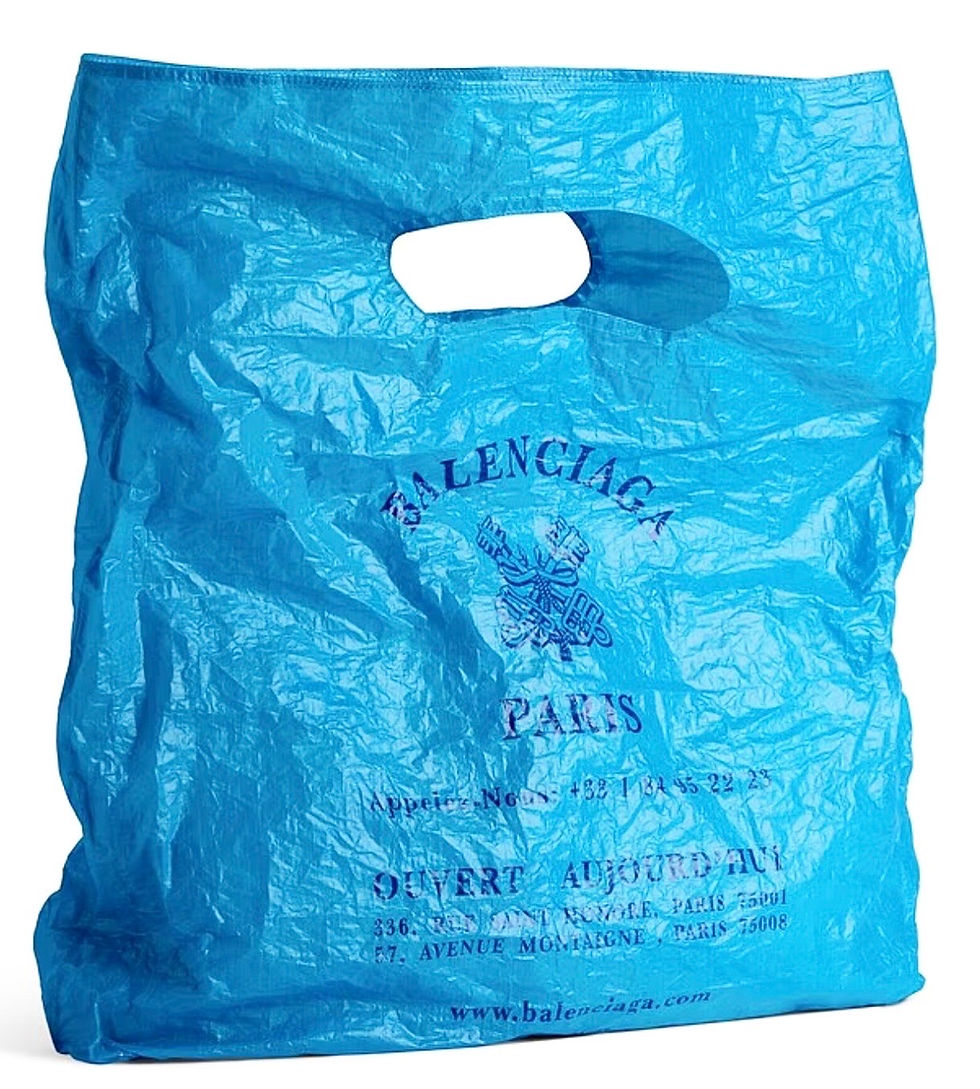
Balenciaga’s latest offering a crinkled polyamide tote visually indistinguishable from a worn supermarket bag has ignited a wave of debate across fashion media and consumer forums. Priced at an eyebrow-raising £775 as part of the Winter 2025 collection, the piece is emblematic of a growing phenomenon in luxury fashion: the elevation of the everyday into aspirational scarcity. This article explores the underlying dynamics designer intent, consumer psychology, and the shifting boundaries of what constitutes luxury.
The product and its price
The Marché Packable Tote, with its creased, durable polyamide build and subtle branding, is deliberately crafted to mimic the aesthetic and tactile irregularities of a discarded bag . Unlike typical plastic, it employs materials like Dyneema a high-strength polymer living up to its premium tag.

Fashio as ironic commentary or cynical branding?
Fashion critics describe the move as “luxury trash bag turned aspirational” . Some see it as tongue-in-cheek critique by creative director Demna, poking fun at the absurdity of luxury branding. Others argue it’s a savvy exploitation naming the mundane as exclusive propels desirability.
A historical echo
In 2017, Balenciaga launched a leather or nylon tote that uncanny mirrored IKEA’s $0.99 FRAKTA bag, priced at $2,145. IKEA famously responded with humor: “deeply flattered” by the resemblance . The pattern suggests Balenciaga’s repeated strategy: leveraging cultural familiarity for shock value and brand reinforcement.

4.Consumer perception and backlash
Reactions have varied. For some, it’s a pointed critique of performative consumption; for others, a total absurdity. Online discourse picks up the tone of frustration why pay hundreds or thousands for something a few cents could buy? Yet, these items often sell out, indicating a paradox: viral mockery can drive desirability.
5.The broader luxury landscape
Balenciaga isn’t alone. The Row’s £670 rubber flip-flops and Prada’s £700 beach towel suggest luxury increasingly finds itself reproducing banal objects elevated only through branding, scarcity, and irony.
Balenciaga’s “plastic bag” tote exemplifies the surreal extremes of luxury branding: transforming trash into treasure through social currency, scarcity, and cultural irony. It prompts a broader question: when did exclusivity become synonymous with mockery? And will consumers continue rewarding such provocations or will imitation with intention become the new real luxury?
LuxuryFashion
Balenciaga
FashionIrony
DesignerCritique
MarchéTote
LuxuryBranding
ConsumerCulture
FashionTrends
HighFashionControversy
BrandValue


