Frida Kahlo Breaks the Market CeilingFrom $34M to $54M: How a Female Artist Redefined the Global Art Market
- 12 avr.
- 4 min de lecture

Once underestimated in the international art market, Frida Kahlo is now commanding record-breaking prices, captivating collectors from New York to Dubai and redefining the value of Latin American art.

For decades after her death, Frida Kahlo was admired primarily as a cultural icon, a feminist symbol, and a deeply personal painter whose works explored identity, pain, and resilience. Yet for much of the twentieth century, the Mexican artist remained somewhat overlooked in the global art market, often overshadowed by her husband, muralist Diego Rivera.
Today, however, the situation has dramatically changed. Over the past fifteen years, Frida Kahlo has become one of the most sought-after artists at auction, with collectors competing fiercely for the rare opportunity to acquire one of her paintings.
Her works, which rarely appear on the market, now command prices that rival those of some of the most celebrated modern masters. Museums, private collectors, and international buyers increasingly view Kahlo not only as a historical figure but also as a cornerstone of twentieth-century art.
This surge in interest reflects both a cultural reevaluation of her work and a broader shift in the global art market toward artists whose stories resonate deeply with contemporary audiences.
A Rare Presence on the Auction Market
One of the defining features of Frida Kahlo’s market is its scarcity.
During her lifetime, Kahlo produced only around 150 paintings, many of them intimate self-portraits that explored themes of identity, suffering, and cultural heritage. Unlike artists who created thousands of works, Kahlo’s output was relatively small, and a significant number of her paintings are now housed in museum collections.
Institutions such as the Museo Frida Kahlo in Mexico City, commonly known as Casa Azul, preserve many of her most important works. Major museums in the United States and Europe have also acquired pieces over the years, further reducing the number of paintings available to private collectors.
As a result, whenever a Kahlo painting appears at auction, it generates enormous attention within the art world.
Collectors understand that such opportunities are exceptionally rare, and competition among bidders often drives prices far beyond initial estimates.
Breaking Records
The turning point for Kahlo’s auction market came in recent years when several major works shattered expectations.
In 2021, her painting “Diego y yo” sold at auction for more than 34 million dollars, setting a record for the most expensive artwork by a Latin American artist ever sold at auction. The sale marked a historic milestone not only for Kahlo but for the entire Latin American art market.
The painting, an intensely emotional self-portrait created in 1949, depicts Kahlo with an image of Diego Rivera painted on her forehead. The work reflects the complex and often turbulent relationship between the two artists.
The dramatic bidding battle that led to the record price demonstrated the growing appetite among collectors for works by Kahlo.
Since then, the market has continued to strengthen, with galleries and auction houses reporting sustained interest from international buyers.
The Globalization of the Art Market
Kahlo’s rise is closely linked to the globalization of the art market.
In the past, collectors from Europe and the United States dominated major auctions. Today, the pool of buyers has expanded dramatically, with new collectors emerging in regions such as Asia and the Middle East.
These buyers are increasingly interested in artists who represent strong cultural narratives and distinctive identities. Kahlo’s work, deeply rooted in Mexican culture and personal storytelling, resonates strongly with this new generation of collectors.
Her paintings combine surreal imagery, symbolism, and autobiographical elements that make them instantly recognizable.
For collectors seeking artworks with powerful narratives, Kahlo represents a compelling choice.
Museums and Cultural Recognition
Another factor driving Kahlo’s market is the growing number of museum exhibitions dedicated to her work.
Major institutions around the world have organized exhibitions exploring her artistic legacy and cultural impact. These shows have attracted large audiences and helped introduce her work to new generations of viewers.
As museum recognition increases, so does market value.
Art historians often note that the relationship between museum exhibitions and auction prices is closely intertwined. When an artist’s work is highlighted in prestigious exhibitions, collectors tend to reassess its importance.
In Kahlo’s case, decades of scholarly research and exhibitions have gradually elevated her status within the canon of twentieth-century art.
What was once considered a niche market for Latin American art has now become a central part of the global art conversation.
The Power of Narrative
Frida Kahlo’s extraordinary life story has also contributed significantly to her popularity.
Her dramatic biography marked by physical suffering, political engagement, and a passionate artistic vision has captivated audiences worldwide.
Kahlo survived a devastating bus accident at the age of eighteen that left her with lifelong injuries and chronic pain. During her long recovery, she began painting self-portraits while confined to bed.
These paintings became deeply personal reflections on her physical and emotional experiences.
Over time, Kahlo’s life story became inseparable from her art. Her self-portraits often incorporate symbolic elements representing pain, identity, and Mexican heritage.
For modern collectors, this narrative dimension adds an emotional depth that goes beyond aesthetics.
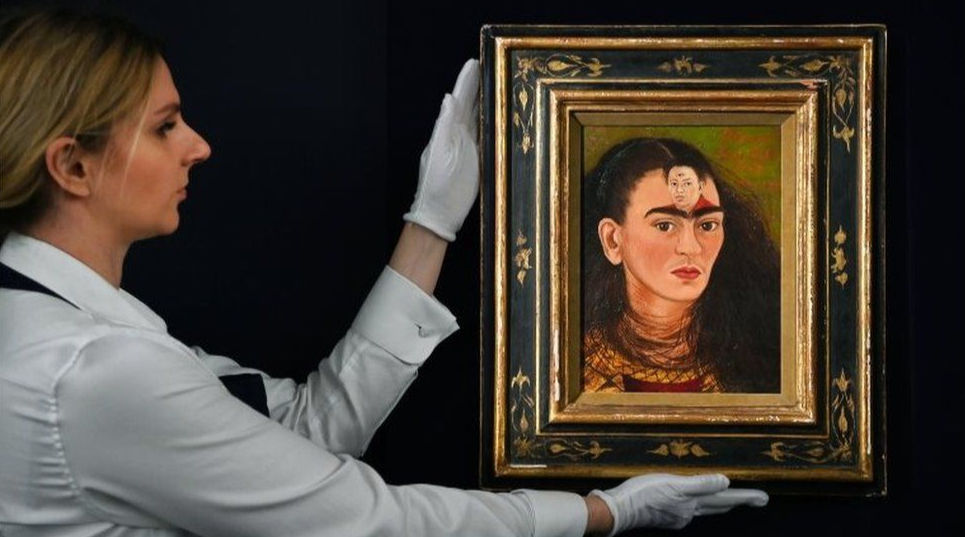
Frida Kahlo art fetches record $34.9m at auction
A New Generation of Collectors
The growing presence of younger collectors in the art market has also played a crucial role in Kahlo’s resurgence.
Many contemporary buyers are drawn to artists whose work engages with themes of identity, gender, and cultural heritage.
Kahlo’s art addresses all of these themes with remarkable honesty and visual power.
Her paintings speak directly to issues that remain highly relevant today, including the exploration of personal identity and the representation of marginalized voices in art history.
As museums, scholars, and collectors continue to reassess the contributions of women artists, Kahlo has emerged as one of the most influential figures of the twentieth century.
An Enduring Legacy
Today, Frida Kahlo occupies a unique position in the art world.
She is simultaneously a cultural icon, a historical figure, and a major force in the global art market.
Her works are coveted by collectors not only for their rarity but also for their emotional intensity and cultural significance.
As the art market continues to evolve, many experts believe that Kahlo’s influence will only grow stronger.
With relatively few paintings remaining in private hands, each appearance at auction becomes an event in itself a moment when collectors compete not just for a painting, but for a piece of artistic history.
FridaKahlo
ArtMarket
AuctionRecords
LatinAmericanArt
CollectorsMarket
Luxe Magazine Switzerland


Commentaires