Hermès’ London Masterstroke: Why the New Bond Street Maison Is More Than a Store
Dernière mise à jour : 17 juin

At a time when many luxury houses are navigating slowing demand, geopolitical uncertainty and changing consumer habits, Hermès has made a move that appears almost counterintuitive. The French maison has unveiled its new flagship Maison at 166 New Bond Street in London, a monumental project spanning six interconnected historic townhouses, 55 rooms and five floors in one of the world’s most expensive retail districts. On the surface, it is an impressive store opening. In reality, it may be one of the most revealing statements about the future of luxury that we have seen in years.
Because Hermès is not a company known for making impulsive decisions.
Unlike many luxury competitors that have pursued rapid expansion over the past decade, Hermès has built its reputation on patience. The company famously limits production, controls distribution and resists the temptation of short-term growth. This is the same house that transformed waiting lists into a symbol of desirability and scarcity into a business model. Which makes its latest investment all the more fascinating.
The story actually began long before the ribbon-cutting ceremony.
Hermès acquired the New Bond Street property in 2009, when the site was still occupied by Asprey, one of Britain’s most historic luxury institutions. Rather than rushing into development, the company spent years studying, restoring and reimagining the space. The result is not simply a larger store. It is one of the most ambitious retail environments ever created by Hermès outside France. The new Maison now joins an elite group of global flagships alongside Paris, New York, Tokyo, Shanghai and Seoul.

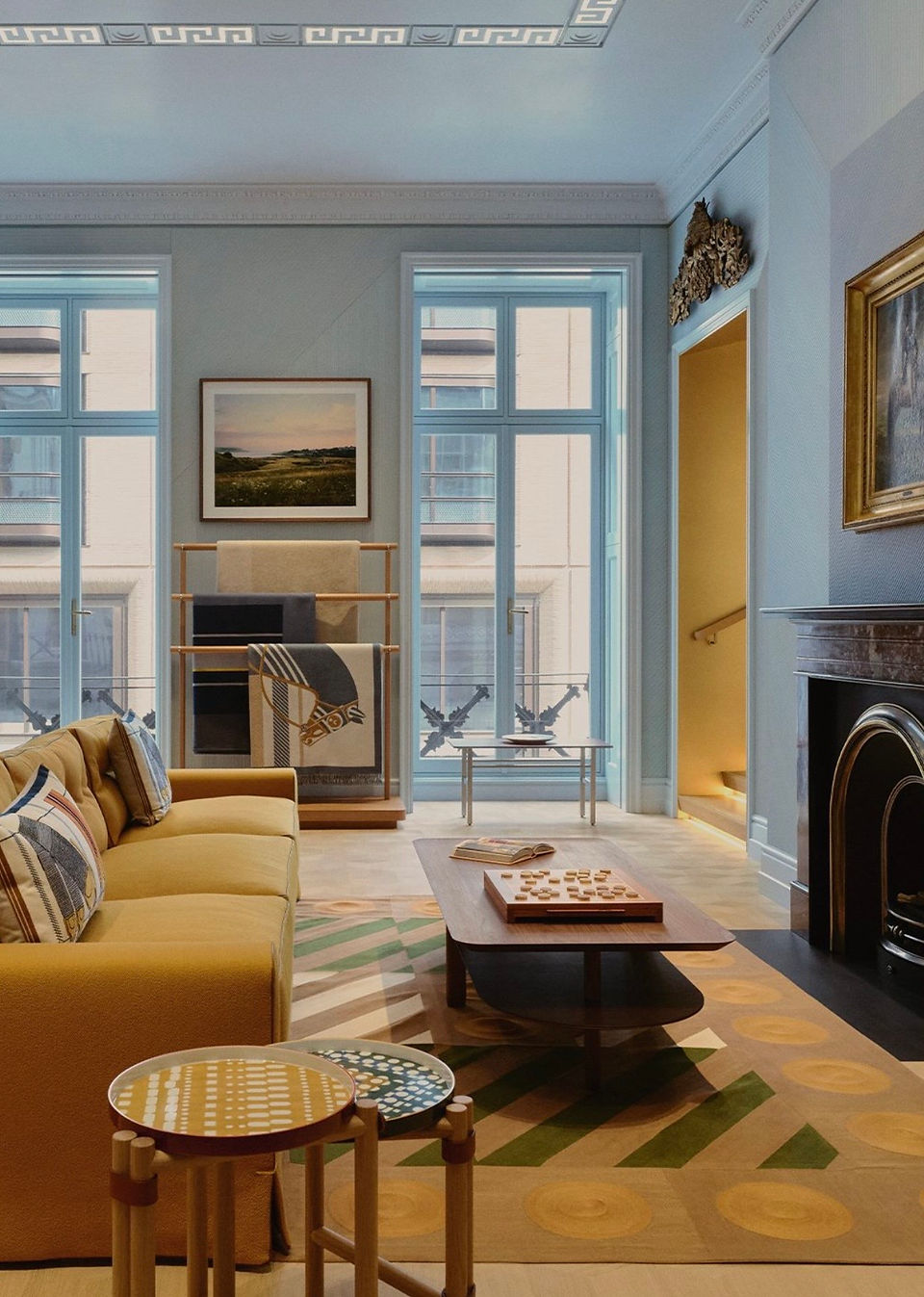
Yet the size of the project is only part of the story.
The more important question is why Hermès chose to invest so heavily in physical retail at a moment when much of the industry continues to obsess over digital transformation. The answer reveals a profound shift taking place inside luxury.
For years, analysts predicted that e-commerce would eventually reduce the importance of flagship stores. Hermès appears to be betting on the opposite outcome. The Maison on Bond Street is built around an idea that algorithms cannot replicate: experience.
Visitors move through a sequence of rooms that feel closer to a private residence than a commercial space. Historic architecture meets contemporary design. More than fifty artisans contributed bespoke elements to the interiors. Every staircase, wall covering, display and piece of furniture has been carefully considered. The objective is not simply to sell products. It is to immerse visitors in the culture of Hermès.
This distinction matters.
Luxury’s greatest challenge today is not manufacturing products. It is creating emotional value in an age where everything can be seen, compared and purchased instantly. A handbag can be photographed. A silk scarf can be viewed online. But atmosphere remains impossible to digitize.
Hermès understands that truth better than most.
The new Bond Street Maison arrives during a period when London itself faces questions about its future position in the global luxury landscape. Since Brexit, analysts have repeatedly debated whether cities such as Paris, Milan or Dubai could erode London’s influence among affluent international consumers. Yet Hermès appears to be making a very different calculation.
Its investment suggests the company believes London remains one of the world’s essential luxury capitals.
That confidence is not insignificant. Bond Street now ranks among the most expensive retail destinations on the planet, with rental values surpassing many rival luxury districts across Europe. Choosing to expand here rather than retreat sends a powerful signal to investors, competitors and consumers alike.
But perhaps the most interesting lesson lies elsewhere. Many brands speak about heritage. Hermès actively builds it.
The company could have created a spectacular modern flagship filled with screens, technology and visual spectacle. Instead, it invested in craftsmanship, restoration and permanence. In an industry often driven by trends, Hermès continues to focus on longevity.
That approach explains why the Maison feels less like a retail project and more like a declaration of philosophy.
The opening of 166 New Bond Street is not ultimately about square footage, architecture or even sales performance. It is about reaffirming a belief that has guided Hermès for nearly two centuries: that true luxury is not created by speed, visibility or scale.
It is created by patience.
And in a world increasingly obsessed with immediacy, patience may have become the rarest luxury of all.

Patricia Holdener
Editor-In-Chief
Luxe Magazine Switzerland
Hermes HermesMaison
BondStreet LondonLuxury
LuxuryRetail FrenchLuxury
LuxuryIndustry Craftsmanship
Mayfair
LuxeMagazineSwitzerland


Commentaires