Miu Miu at Art Basel Paris 2026: Alice Diop Explores Art, Memory and the Power of Black Women’s Stories

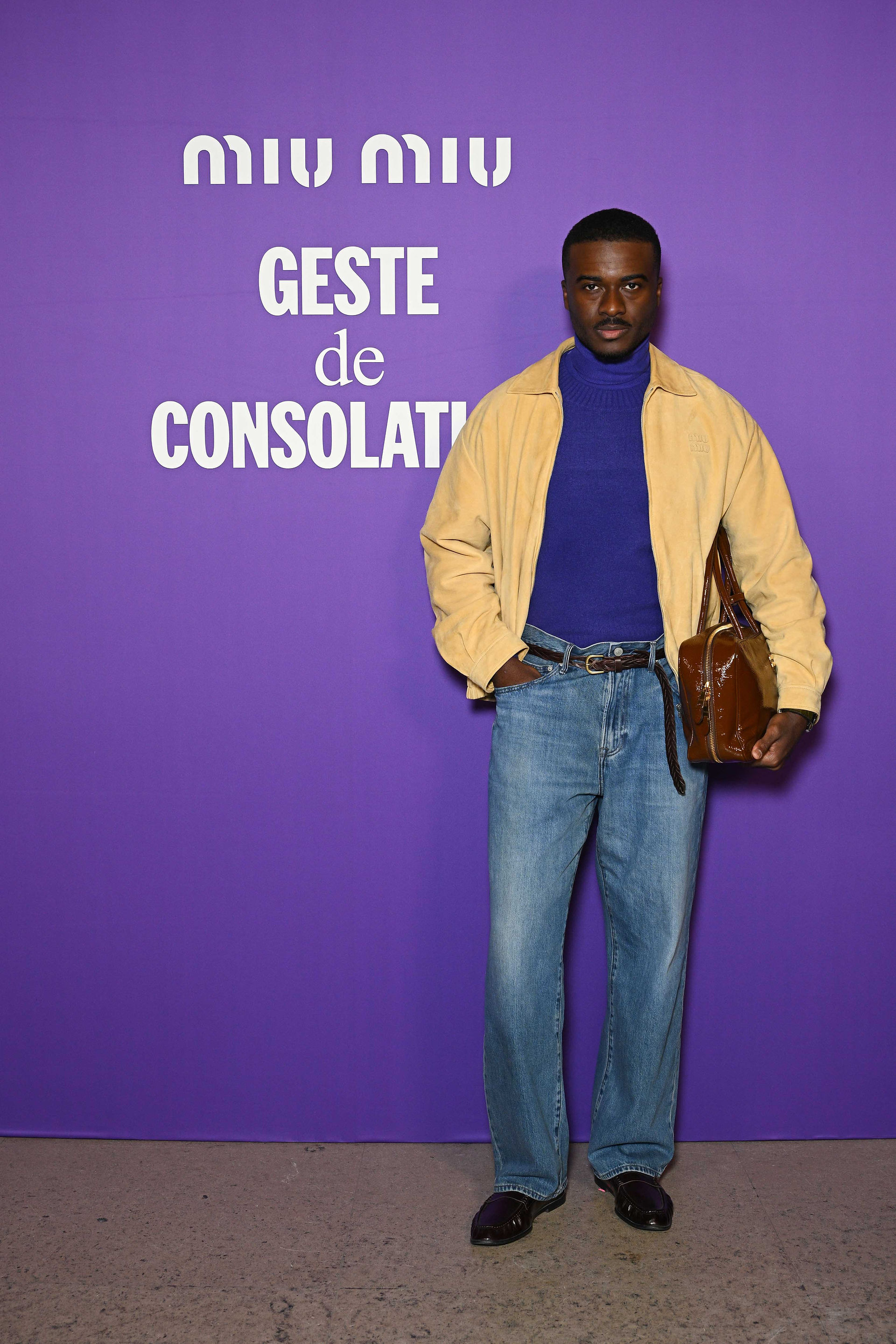
Returning as Official Partner of the Art Basel Paris Public Program for the third consecutive year, Miu Miu presents Geste de Consolation, an ambitious multidisciplinary project by French filmmaker Alice Diop. Hosted at the Palais d’Iéna, the exhibition brings together cinema, photography, literature, dance, music and sculpture in a powerful exploration of representation, remembrance and collective healing.
Miu Miu and Alice Diop Bring a New Artistic Vision to Paris
At the intersection of fashion, contemporary art and cultural dialogue, Miu Miu continues to expand the boundaries of its creative universe. For the third consecutive year, the Italian luxury house returns as Official Partner of the Art Basel Paris Public Program, presenting a special commission that places artistic expression and women’s experiences at its centre.
Titled Geste de Consolation (Gesture of Consolation), the project has been conceived by French filmmaker Alice Diop at the invitation of Miuccia Prada. Presented at the Palais d’Iéna, the headquarters of France’s Economic, Social and Environmental Council and the setting for Miu Miu’s runway shows, the exhibition transforms the monumental architectural space into an immersive encounter between artistic disciplines.

For Diop, whose cinematic work examines identity, memory, migration and colonialism, the project marks a significant first: her debut in exhibition-making. Moving beyond the screen, she translates her distinctive filmmaking approach into a carefully orchestrated spatial narrative, inviting visitors to experience images, words, sounds and performances as interconnected fragments of a larger story.
The result is an artistic proposition that reflects Miuccia Prada’s longstanding interest in the relationship between cinema and art, while continuing Miu Miu’s exploration of women’s lives, personal histories and stories that have remained outside the dominant cultural narrative.
Challenging the Gaze Through Black Women’s Creativity
At the heart of Geste de Consolation lies a question that has shaped much of Alice Diop’s work: how have Black women been represented throughout art history, and how can contemporary artistic practice challenge the legacies of those representations?
The exhibition brings together Black women artists whose work, in different forms, creates possibilities for recognition, reflection and repair.
“I want my curation to center on acts of consolation conceived by Black women artists, each active in their own discipline, to repair the fetishizing gaze to which centuries of art history have confined us,” Diop explains.
Her approach is not limited to confronting historical images. Instead, the exhibition proposes a more expansive conversation about the ways representation continues to influence the present, shaping how people see themselves and one another.
Diop describes the participating women as artists “who have healed me, who have nourished me.” Their contributions form a collective expression of creativity, resilience and intellectual freedom.
The project also develops ideas introduced in Fragments for Venus, Diop’s 2025 contribution to Miu Miu Women’s Tales. That film explored the representation of Black women, establishing a dialogue that Geste de Consolation now extends into a physical, multisensory environment.
Four Spaces, One Journey Through Art and Memory
Conceived as a form of cinematic montage, Geste de Consolation unfolds across four interconnected spaces. Each introduces a distinct artistic language, with the sequence of encounters guiding visitors through a narrative built on proximity, emotion and discovery.
The journey begins with a photograph by South African artist Zanele Muholi. Beyond it, Diop’s two-screen video installation brings together archival images and film excerpts that have shaped her perspective as a filmmaker. Disturbing representations sit alongside images that have offered consolation, establishing the central tension between historical violence and the possibility of healing.
The second space, Chambre à soi (A Room of One’s Own), offers a different atmosphere. Within the monumental concrete structure of the Palais d’Iéna, a living room and library emerge across richly coloured carpets featuring a motif by artist Mary Lee Bendolph.
Open to all visitors, the library brings together books that have influenced Diop’s intellectual life. More than a collection of references, it becomes a portrait of a Black woman thinking in the twenty-first century: a place for dreaming, creating and imagining emancipation.
The exhibition then moves into a performance arena, where literature, movement and music take centre stage.
Literature, Dance and Music Become Acts of Consolation
At the heart of the performance programme, texts by Penda Diouf, Zora Neale Hurston, June Jordan, Audre Lorde, Marie Ndiaye, Zadie Smith and other writers are brought to life through readings by a rotating group of performers.
Among them are Penda Diouf, Alice Da Luz Gomes, Latifa Laabissi, Séphora Pondi, Davide-Christelle Sanvee and Betty Tchomanga.
The programme also features an adapted version of Prophétique, a work by Ivorian choreographer Nadia Beugré, performed by five dancers. Chicago-based composer and musician Angel Bat Dawid appears with her ensemble, Sistazz of the Nitty-Gritty, adding another dimension to the exhibition’s dialogue between artistic forms.
Rather than presenting these disciplines as separate experiences, Diop brings them together in a continuously evolving composition. The visitor moves between voices, bodies, sounds and images, encountering meaning through the relationships formed between them.
Simone Leigh’s Monumental Sentinel Brings the Journey to a Close
The final space is defined by Sentinel (Mami Wata), a monumental bronze sculpture by American artist Simone Leigh.
Standing nearly five metres tall, the elongated female figure is encircled by a serpent. Leigh’s interpretation draws on Mami Wata, a powerful West African water spirit whose image has travelled and transformed across Africa and its diasporas.
Associated with both destructive and creative-generative powers, Mami Wata embodies a complex duality. In the exhibition, the sculpture becomes an imposing, silent presence, watching over the surrounding space like an ambiguous guardian.
Its placement gives the visitor’s journey a final point of reflection. Throughout the exhibition, spectatorship itself becomes part of the architecture: seating arrangements invite visitors to observe the artworks and performances, look at one another and ultimately confront the monumental figure.
The contrast between institutional seating and the domestic intimacy of the library creates different experiences of comfort, contemplation and collectivity.




For Diop, the exhibition functions like a film assembled through successive edits. Every sound, word, image and voice is positioned in relation to the visitor’s movement, allowing meaning to accumulate through experience rather than direct explanation.
From Voyage of the Sable Venus to a New Exhibition Language
The intellectual foundations of Geste de Consolation extend back to 2023, when Diop began developing related research through Reformuler, her Carte Blanche for the Festival d’Automne à Paris. That programme brought together readings, conversations, writers and performers around questions of memory, transmission, representation and the possibility of rewriting inherited narratives.
A central reference was Voyage of the Sable Venus, a prose poem by American poet Robin Coste Lewis. Encountered during an artist residency in New York, the work traces an imagined journey through art history in search of Black female bodies that have been overlooked, fragmented or objectified. Diop subsequently developed this research into Le Voyage de la Vénus Noire, presented with the Festival d’Automne à Paris in 2025. With Geste de Consolation, the ideas take on a new form, moving from literary and theatrical exploration into an immersive exhibition environment.
Born in 1979, Diop is an award-winning French filmmaker and screenwriter. Her film Nous received the Best Documentary Film award at the 2021 Berlinale, while Saint Omer earned her the Silver Lion at the Venice Film Festival in 2022. Her work is recognised for bringing lives and perspectives often overlooked in public discourse into the centre of cinematic attention.
Through this commission, Miu Miu continues to explore the relationship between fashion, contemporary art and cultural expression. Alice Diop’s first exhibition project transforms that dialogue into a journey through memory, representation and the possibility of repair.
At the Palais d’Iéna, consolation becomes more than a theme. It becomes an encounter between artists, histories and audiences, offering a space in which inherited images can be reconsidered and new narratives imagined.
Patricia Holdener
Editor-In-Chief
Luxe Magazine Switzerland
MiuMiu ArtBaselParis AliceDiop
ContemporaryArt
WomenInArt LuxuryCulture ArtAndFashion
ParisArtScene
LUXEMagazineSwitzerland LUXE


Commentaires