Southern Africa’s high-end eco-destinations are moving beyond sightings in 2026
Dernière mise à jour : 10 juin
Southern Africa – May 2026
As luxury travel in 2026 shifts toward regenerative experiences, the narrative is evolving.
Research from Booking.com indicates that 85% of global travellers are now seeking more
sustainable ways to travel, with high-end travellers looking for experiences that offer both
meaning and measurable impact.
Across Southern Africa, luxury safari hospitality establishments are responding by redefining
what a high-end wildlife encounter looks like, moving beyond sightings to more direct forms
of conservation engagement, where time spent in the wild contributes meaningfully to the
survival of the species encountered.
From the ancient flight paths of endangered vultures to the midnight nesting grounds of
prehistoric sea turtles, four of Southern Africa’s premier eco-tourism destinations are offering
guests rare proximity to conservation in action.


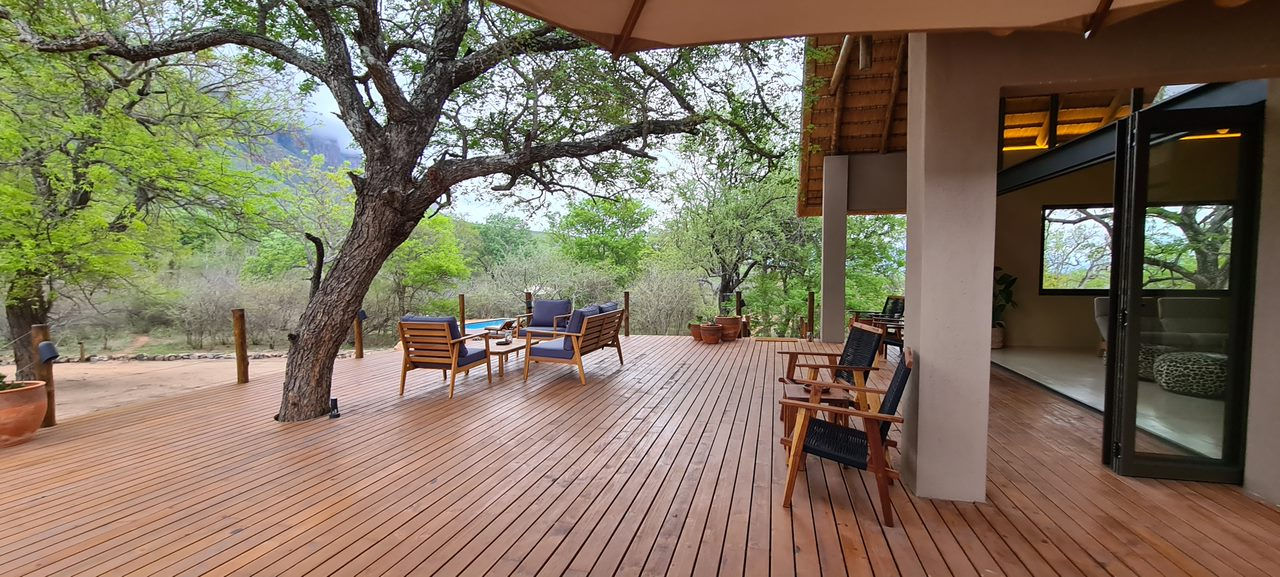
The Giants of the Sky: Cape Vulture Nature Reserve
While the Big Five dominate the ground, the Cape Vulture (Gyps coprotheres) commands
the thermal currents of the Northern Drakensberg escarpment. As one of Africa’s most
threatened birds of prey, vultures play a vital ecological role, quietly supporting ecosystem
health by preventing the spread of disease.


Cape Vulture Nature Reserve protects the third-largest breeding colony in South Africa.
Guests witness these “Sky Giants”, with wingspans of up to 2.6 metres, from a vantage point
few ever experience. With only around 4,000 breeding pairs remaining globally, the
presence of more than 700 pairs here represents a significant conservation success story.


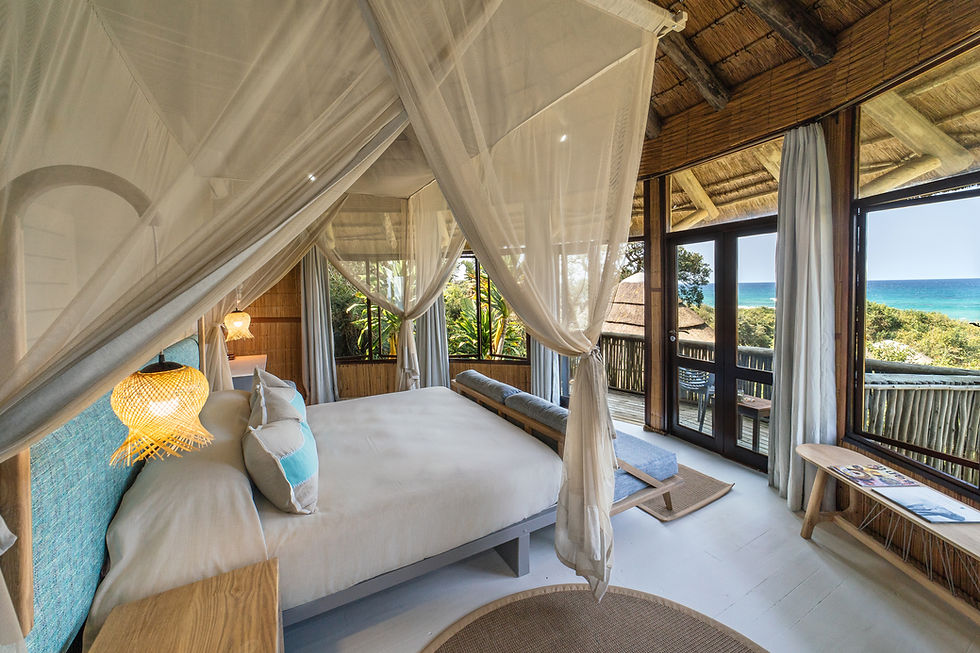
The Ancestral Shoreline: Thonga Beach Lodge
Located within a UNESCO World Heritage site, Thonga Beach Lodge offers an intimate
window into the nesting cycles of Leatherback and Loggerhead turtles.
Here, guests have a rare opportunity to witness nesting behaviour up close. Having often
swum the length of the African continent, female turtles return to the same beaches each
year. Leatherbacks, the largest of all sea turtles, can weigh up to 916 kg, while
Loggerheads, though smaller, are the world’s largest hard-shelled turtles. Both species are
known to lay their eggs within metres of where they emerged as hatchlings.
Beneath the surface, surrounding reefs support more than 1,250 fish species, almost
comparable to the diversity of the Great Barrier Reef.


The Island Enigma: Tsowa Safari Island
Positioned in the middle of the Zambezi River, Tsowa Safari Island offers a rare perspective
on African elephant behaviour.
It is one of the few places where guests can regularly observe two distinct herds of
elephants crossing the river. The island sits at the intersection of three national parks within
an hour’s reach, yet remains a quiet sanctuary, home to 23 ancient baobab trees, some over
a thousand years old, and rare sightings such as Pel’s fishing owl. With more than 350 bird
species and 75 mammal species recorded in the surrounding Zambezi National Park, the
island functions as an important corridor for wildlife movement.


The Rhino’s Last Stand: Rhino Ridge Safari Lodge
As the first luxury lodge in Hluhluwe iMfolozi Park, Rhino Ridge Safari Lodge sits on the
historic landscape where the southern white rhino was brought back from the brink of
extinction.
In the 1940s, fewer than 100 white rhinos remained. Dr Ian Player’s Operation Rhino
relocated the last surviving animals into protected breeding programmes under close
monitoring. From this foundation, the population slowly recovered. Today, all southern white
rhinos share a genetic link to this landscape. While the park is home to 86 mammal species,
the white rhino remains its most defining conservation legacy.


In 2026, the greatest luxury is access to genuine, unmanaged wilderness, with a purpose.
The survival of these species is not guaranteed; it is the result of continuous, on-the-ground
conservation efforts. Whether observing the descendants of the southern white rhino at
Rhino Ridge Safari Lodge, witnessing ancestral turtle nesting cycles at Thonga Beach
Lodge, watching vulture colonies above the Northern Drakensberg escarpment, or observing
elephant crossings along the Zambezi, guests are quietly drawn into the ongoing work of
protection and recovery. OK
For more information on Cape Vulture Nature Reserve, visit cvnr.co.za or contact the
reservations team at reservations@capevulturelodge.co.za / +27 (0)76 362 0390.
For more information on Thonga Beach Lodge, Tsowa Safari Island and Rhino Ridge Safari
Lodge, visit Isibindi.co.za or contact the reservations team at res@isibindi.co.za / +27 (0)35
474 1473.
ENDS
For media enquiries or interview opportunities, please contact Sky Gordon at
sky@phoenixcollective.world / +27 (0)82 849 4160.
LuxuryTravel LuxuryHospitality SustainableTourism ConservationTravel
AfricanTourism LuxurySafari TravelIndustry HospitalityTrends
EcoLuxury Leadership TravelInnovation
LuxuryLifestyle LuxeMagazineSwitzerland


Commentaires