John Galliano x Zara How the Fashion Designer Is Rewriting the Rules of the High Street
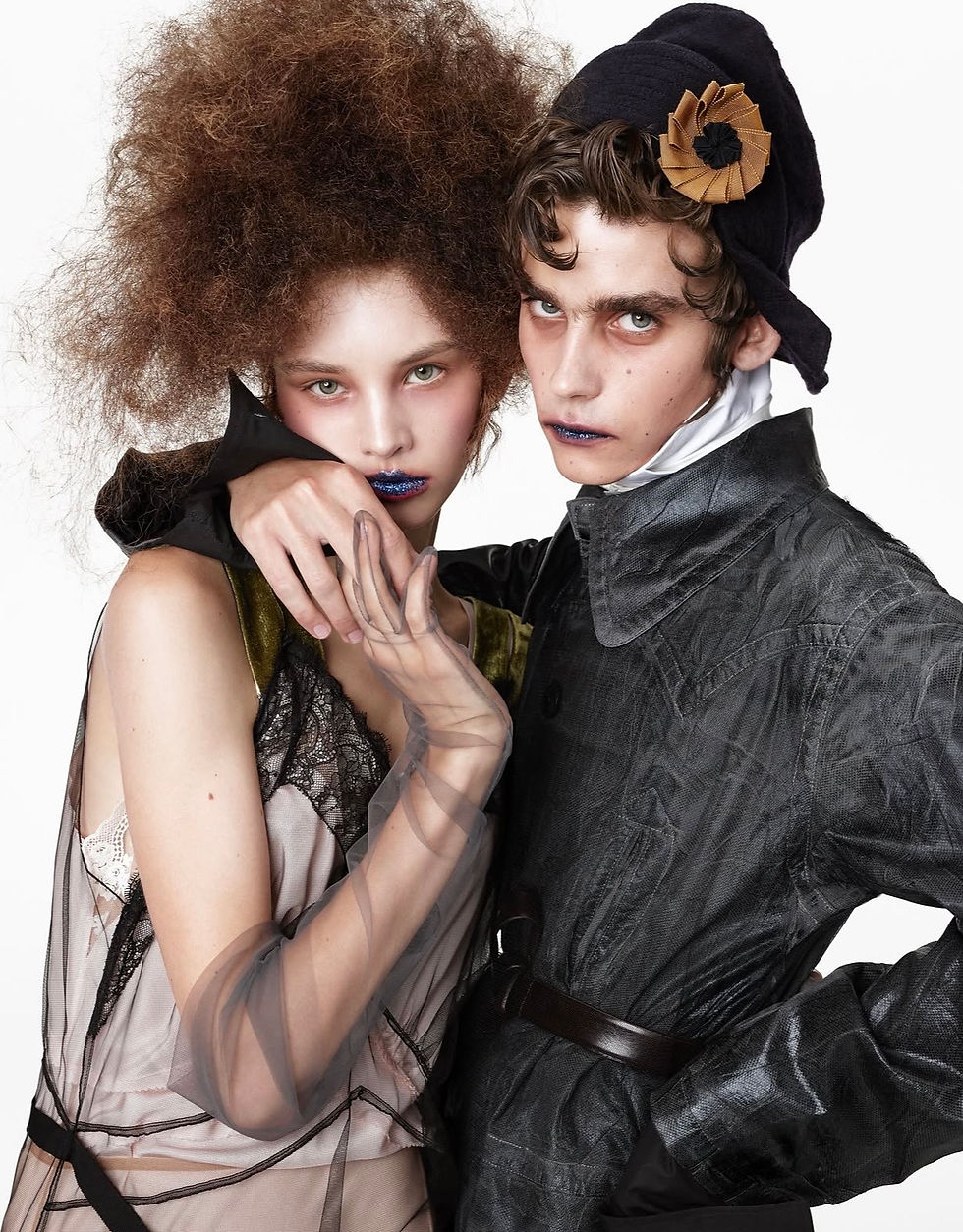
With Re{form}, John Galliano returns to fashion through an unexpected alliance with Zara, transforming pieces from the retailer’s past into theatrical, genderless designs that blur the line between couture and mass fashion. There is something almost perfectly Galliano about the surprise.
After leaving Maison Margiela in December 2024, John Galliano disappeared from the fashion calendar. Then came the announcement that he would collaborate with Zara. Not a couture house. Not an established luxury group. Zara.The reaction was immediate: curiosity, disbelief and, for some, outright confusion. Yet the first chapter of the partnership, Re{form} Zara Authored by the Couturier John Galliano, now makes the logic considerably clearer. Galliano has not simply designed a collection for Zara. He has treated Zara itself as material. And that distinction is crucial.


© 2026 Zara
The collection that starts with what already exists
Re{form} is built around an unusual creative premise. Rather than designing a wardrobe from a blank page, Galliano and his team selected garments from Zara’s previous seasons and dismantled, enlarged, reduced, repositioned and reconstructed them.
A coat becomes something else. A shirt can be transformed through exaggerated proportions. Trousers are cut apart and recombined. A seemingly ordinary dress can be reduced to a collar or transformed through draping and reconstruction.
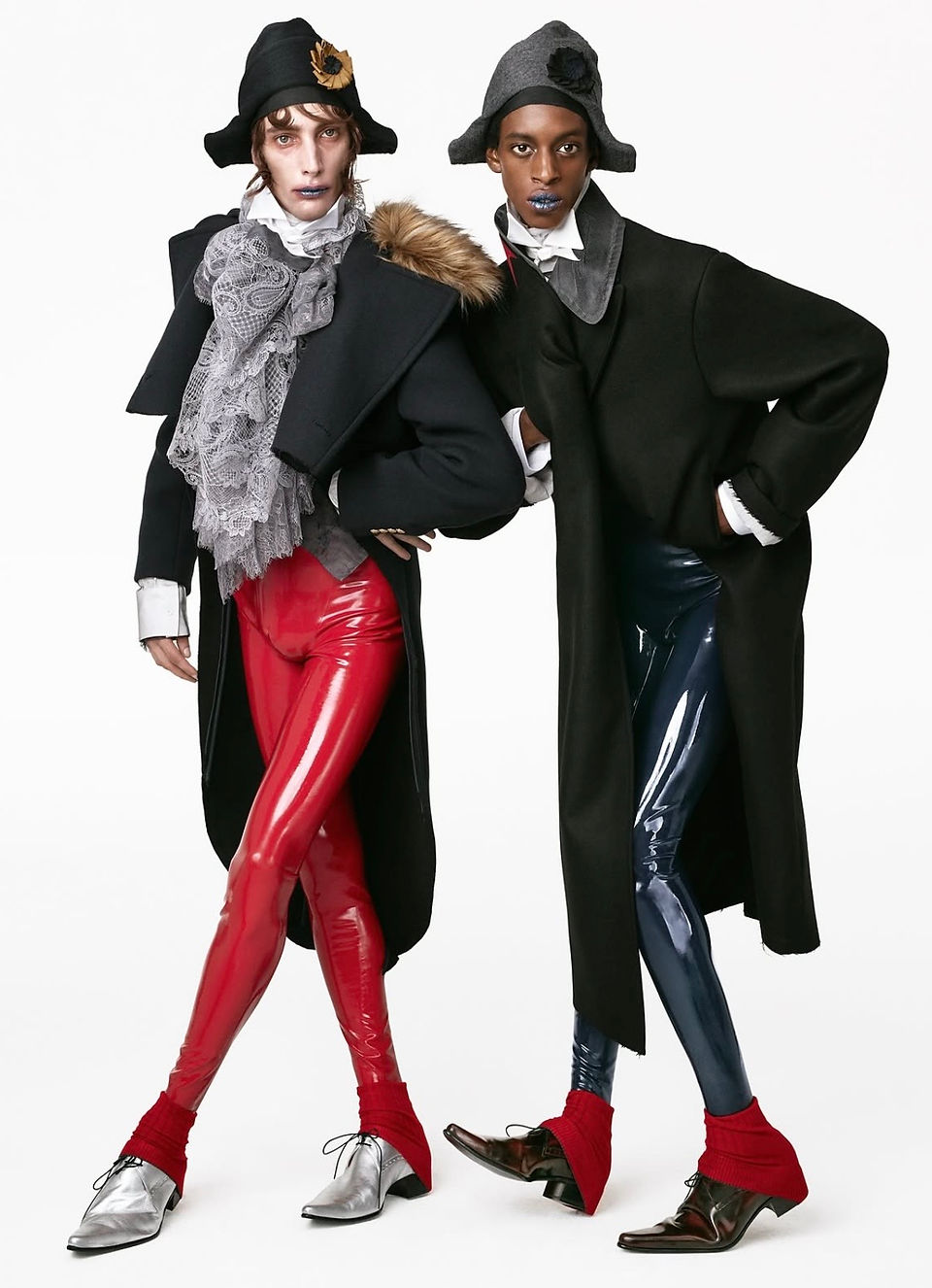
Galliano calls the process “re-authoring”. It is a concept that echoes one of the central principles of his career: taking familiar historical references and making them strange again. The collection draws particularly on Les Incroyables and Les Merveilleuses, the flamboyant dandies and women associated with post-Revolutionary France. Their exaggerated silhouettes and rebellious elegance are filtered through contemporary tailoring, film noir, gardening clothes and Galliano’s instinct for theatrical transformation.
The result is not intended to look like conventional Zara.


© 2026 Zara
It is intended to make the viewer look at Zara differently. From Maison Margiela to the mass market. The collaboration also marks a very specific moment in Galliano’s career. His decade at Maison Margiela ended in 2024, following a period in which he transformed the house into one of the most closely watched laboratories of contemporary fashion. His final Artisanal presentation became a viral cultural moment, but Galliano subsequently stepped away from the relentless fashion cycle. His meeting with Marta Ortega Pérez, chair of Inditex, began several years earlier. The two first crossed paths around an exhibition of Steven Meisel’s photography at Ortega Pérez’s MOP Foundation in A Coruña. The relationship eventually developed into the Zara project, which Galliano began working on privately in January 2026.
The partnership runs for two years and four collections, making this considerably more than a one-off celebrity capsule.
That is where the story becomes more interesting from an industry perspective.
Zara has increasingly sought collaborations with names from the luxury and fashion worlds, including Stefano Pilati and Narciso Rodriguez. But Galliano represents a different proposition: a designer whose identity is inseparable from couture technique, historical storytelling and radical reconstruction.
Couture thinking, Zara infrastructure
Galliano has been unusually explicit about what attracted him to the project. The designer told Vogue that Zara’s manufacturing and sourcing capabilities were “jaw-dropping”, while stressing that he had no intention of simplifying his creative approach for a mass audience. That may be the collection’s most revealing detail. The experiment is not simply about putting a famous designer’s name on a more accessible garment. It is about testing how far a mass-production infrastructure can accommodate a couture designer’s appetite for distortion, construction and fantasy.
The campaign reinforces that ambition. Photographed by Steven Meisel, with styling by Karl Templer and beauty by Pat McGrath and Guido Palau, it gives the collection the visual language of a major fashion editorial rather than a conventional high-street campaign.
The pieces are genderless, theatrical and deliberately difficult to reduce to a single commercial silhouette. Prices, however, remain firmly within Zara territory by Galliano standards, beginning at around €30 and reaching substantially higher for more elaborate pieces. Vogue notes, by comparison, that a Galliano Dior haute couture piece sold at auction earlier this year for €663,000.


© 2026 Zara
A new kind of accessibility
There is an obvious irony here. Galliano built his reputation on fashion that demanded time, craftsmanship and fantasy. Zara built its global influence on speed, scale and accessibility. Re{form} places those two philosophies in direct conversation. Whether the experiment changes the way consumers understand Zara or the way the industry understands accessibility is impossible to determine yet. But Galliano’s own description of this period is telling. He considers his early career, from Central Saint Martins through Dior, his “first act”; Maison Margiela became the second. Re{form}, he says, begins his third act.
For a designer whose career has repeatedly been about reinvention, perhaps the most unexpected part is not that John Galliano has returned to fashion. It is where he chose to return.
Patricia Holdener
Editor-In-Chief
Luxe Magazine Switzerland
JohnGalliano Zara ReformZara
Fashion2026 LuxuryFashion HauteCouture FashionNews
StevenMeisel MartaOrtega FashionIndustry
DesignerCollaboration ParisFashionWeek
LuxeMagazineSwitzerland


Commentaires